
It’s Never Too Late

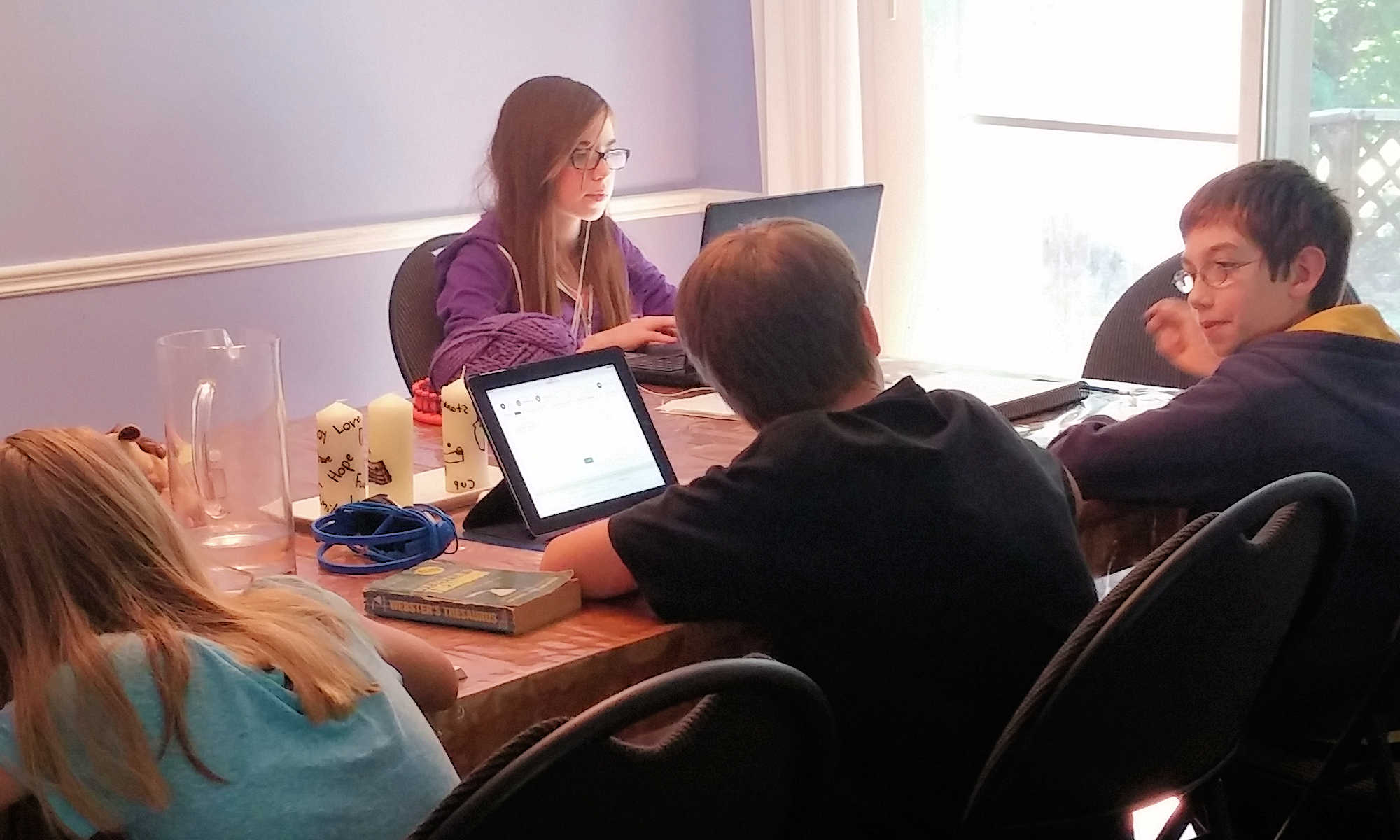
Homeschooling parents often worry about missing something in their children’s education.

Here is a truth that should speak into that concern: It’s never too late to learn something. While it might be too early to learn something – a child might not be developmentally ready – there is no “magical time” to learn things – there is no God-ordained schedule regarding when your child should learn to read, to write, to do arithmetic, or to do calculus, for that matter.

Many years ago, I was sharing with a homeschooling friend that my daughter was having trouble with algebra.

“Oh,” she replied, “I let Sophia drop that. She wants to get into acting, she doesn’t need algebra. And if she ever changes career directions and needs algebra, she can learn it then. She would be more mature, and she would be motivated.”

That was a concept that I had never considered. Once your child can read, and understand basic arithmetic, they can learn anything.

Sometimes we see what our homeschooling friends are teaching their children, and we think we should be doing the same thing. Maybe we should, but maybe not. Your children have a whole lifetime ahead of them, and are learning a lot every day, whether through formal instruction, or simply from life.

What they don’t learn this year, they can learn next year, or maybe in three or four years. Maybe they won’t ever need to learn that particular subject or skill.

I recently met a very successful business man who had been homeschooled. He had never completed a math course in high school. (He had taken some math courses, but had  not completed them.) This man became a successful accountant, and eventually started his own business.

I suppose at some point in university he was motivated to learn math.

Do be prayerful each year about what your child should be learning that year, but don’t panic. They have a whole lifetime ahead of them!


Another School Year has Begun (Part 2 – Our Children’s Attitudes)

In my last post I wrote about how setting a good tone in our homes (and homeschooling) is so important – we need to work on our attitude, projecting positivity.

It helps if you schedule some things every day that your children enjoy. To some children, everything is enjoyable, but to most children, at least something is enjoyable, and yes, there are some children (but not most), to whom nothing is enjoyable.

If you have a child with an overall negative attitude, first, check your own attitude – do you voice negativity or show it on your face? You might have to reckon with that, that is, confess it (to God and to your children) and tell them that you are determined to change. You may give them permission to call you out on it.

But maybe you are the most positive person and your child is still negative and grumpy about everything.

Ask this child about it: “Why are you unhappy?” (“I don’t like such’n such” or “I don’t want to do such’n such”). “Okay, why not? What is it you don’t like about it?”

If they have a reasonable answer, then you can adjust the way such’n such is done. Work with them as much as possible.

If they are being unrealistic, then explain how and why it is unrealistic, why it can’t change, and let them know that if there is something that they don’t like that has to happen anyway, it is their choice to be miserable and grumpy about it or to have a good attitude.

Asking your children questions and really hearing them is important. It is one way to help them think, which is one of the most important things we can teach our children. “Thinking” is something that students don’t learn in many institutional schools.

If they are overall grumpy about being homeschooled, ask them why they would prefer to be in school. Listen. Acknowledge what they said. But be prepared with a list of reasons why you are homeschooling them, and also a list of the negatives of being in school. During this time of COVID-19 masks, social distancing and all that, it should be easy to make a sensible case for homeschooling. If your children are believers, then there is a tremendous case for not sending them to an institution that will teach them that good is evil and that evil is good.

Sometimes people (our children, or us) are simply in a bad mood because they (or we) are in a “poor me” frame of mind. That happens when we look at others and compare what we perceive of their supposed easier life, or better life, or…whatever…to ours. We think we want what they have. Or we think we are being unfairly treated. “Poor me!” Your child might envy a sibling or friend for whatever reason, or just “poor me, I don’t get to play enough, or I don’t have the computer games that my friends do…”

I told my son about a skit that I saw once where there was a wading pool that represented “a pity-party pool” – various people would come and say “Poor me! I ___________” and then say something that they were feeling “poor me-ish” about and get into the pool. At one point someone in the pool changed their perspective and got out of the “Pity-Party Pool of Poor Me”, shedding their grumpiness and embracing joy (or at least contentment). We both agreed that sitting in the Pity-Party Pool of Poor Me wasn’t all that much fun. From that time on, whenever my son was in a bad mood, I would playfully (not heavy handedly) ask him, “Have you gone into the Pity-Party Pool of Poor Me? Get out before you drown!”

Our children can enjoy being homeschooled.

Another School Year – and so it begins…

Here we are – another year of homeschooling, or maybe for some of you: the first! What are some ingredients to make it successful?

I assume that you are doing this of your own free will, that you are not being forced to homeschool – that you are doing this for a reason or for many reasons. But even if you are being forced to homeschool your child(ren), the ingredients for a successful year still apply.

Let’s start with the first ingredient: Your attitude!

You might be confident, with great enthusiasm, or you might be a bit unsure and feel that this is a daunting task. You might look with envy at other moms who send their kids off to school and have some free hours, or you might feel grateful that you get to spend more time with your childen and disciple them. You might have all of these emotions at different points of the day, or you may have all these emotions in the space of a few minutes.

Attitudes are catchy, therefore we need to be intentional to cultivate helpful ones. Our children are more likely to have positive attitudes if we are positive, and are going to have a really hard time having a good attitude, if we don’t. And a huge part of having a succesful school year is our attitudes – ours first, and then our children’s. This is where self-control/discipline comes in.

Decide to have a good attitude. It’s pretty straightforward, although admittedly not always easy. Maybe you’re a natural good attitude type of person, or maybe you are more the type who sees all the negatives and stresses about them.

If you’re struggling with having a positive attitude, these things can help:

Write down why you are home schooling – and ask God to help you with those goals every day.

Write down the positives about homeschooling.

Begin each day with reading the Bible and praying – this doesn’t have to be a huge amount of time, but God is our loving Father and wants to help us. Reading His Word and encountering His Truth and Light, counters the darkness of the world (or our negative attitudes) and is food we need in order to be healthy.

I suggest that you begin your “school day” with your children by reading the Bible to/with them, and then as your first “subject” doing something that you all enjoy – it could be your reading to them all, taking a walk, jumping on a trampoline in your backyard…start with something fun, and together.

Make sure you do something each day that you personally enjoy – the possibilities are endless.

See the interruptions to your schedule/day (and they will come – whether you have to deal with a character issue in your child, or there’s an urgent phone call, or…) as educational opportunities.

Make sure that you connect with people who will encourage you in this journey – if there’s a person, even a friend, that after talking with them/being with them you feel discontent, then don’t spend much time with them. Choose to be with those who leave you feeling encouraged and hopeful.

A positive attitude will be a blessing to you and all those around you, especially your children and will help toward a successful school year.

I’ll write about how to help your children with their attitudes, in my next post.

“Robin’s Rule” or “The First Two Things”

Blackboard with a blank to-do listI have discovered a sort of Law, not a law that someone made up, but a “this is how things work” sort of thing -such as “the law of gravity.” It’s not a rule, although I call it “Robin’s Rule” for alliteration – it’s just something I discovered. It could be called “The Law of the First Two Things” (but don’t you think “Robin’s Rule” sounds better?).

It goes like this: The first two things that you plan for your day get done, the rest…maybe.

What happens is that we make a “to do” list, or a great schedule and we begin, but life happens and invades our plans. By “life,” I mean perhaps a call from a distraught someone that you need to help, perhaps character issues in a child, or a sibling issue that takes an hour to deal with, perhaps someone is sick.

Or maybe you planned math as the first subject, but it takes four times as long as you thought it would because it took extra long for your child to get the new concept you were teaching.

Or maybe you planned that you would read one chapter of the book that you are reading to your children, but everyone was so into it, you read five!

So things number 3, 4, 5, and 6 of your plans may or may not get done. Knowing that, you don’t have to sweat it.

Some years ago, math and piano practice were the first two things on my schedule. When I noticed that day after day we didn’t get to language arts, I just switched it up and began with language arts for a while.

Simple. When you’re consistently not getting to thing number 3, 4, or 5, just remember “Robin’s Rule” or “The Law of the First Two Things,” and change a couple of those things to thing #1 and thing #2. Robin’s Rule.

Because life happens.

God Works in our Children’s Lives!

Each of our children are different, with their own personalities, gifts and challenges.

It is so important to let that sink in. It is so important not to compare them to their siblings, their friends, or even to yourself.

One of our children was not very academic – she found some subjects challenging, but it is possible that her learning style was different from my teaching style. When I read history or literature to a few of my children, this particular daughter would take nothing in. Perhaps I could have explored different ways that she could learn (being a mother of ten, that wasn’t an easy option).

Meanwhile, she was very gifted in music and in dance – both of which we encouraged her to pursue.

But as gifted as she was (and is) in those areas, she is “off the charts” gifted in her social skills and in her care for people. She is able to make every person she meets, whether friend, acquaintance or stranger, feel welcome and loved. And I value that ability very, very much.

I could end right here, because the message that our children each have different gifts and abilities and that the academic-type gifts are not more valuable than other gifts, is a true and important message. But read on:

At the end of her final year of homeschooling high school, Tikvah had some serious medical challenges. Those were dark and difficult days – or rather, a couple of years – but God used them in her life to draw her closer to Himself.

And then…Tikvah decided to pursue an internship for Women’s Ministry through a church across the country. Off she went, only to find that the academic aspect of the internship was extremely rigorous. Tikvah hadn’t initially considered going to university, due to her difficulty with academics, and yet this program was at that level. While she found it daunting at first, she gave it her all, looking to God, and now at the end of this program, she’s at the head of her class, thriving academically to the point where an instructor suggested that she finish her undergrad (this internship can be transferred to a university towards a Bachelor’s degree) and do a double Master’s degree. This was a child who struggled with academics.

I share this story with Tikvah’s permission, to encourage you! God will take care of your children! Look for their unique gifts, pray for them, and trust that God will lead them and cause them to thrive.

Homeschooling in a Covid-19 World

Family of four gathered around dinner tableThose of us who were homeschooling in the 2019-20 school year were going along as usual, when COVID-19 came upon us in March. Unlike those whose children were in school, we continued as we were, teaching our children. On that level, the pandemic didn’t affect us as much as non-homeschoolers.

But even for us things changed suddenly, such as no more homeschool co-ops, sports activities, ballet lessons, play dates, church. The government-ordered shutdown affected some more, some less, depending on how much each family had been doing outside the home.

I didn’t realize the extent of how the lack of interaction with others affected many of my children. But it did. It was a slow slip into a sort of depression that was halted by a crisis—but that’s our story. We’re on a better track now.

Each family has their own view of how dangerous the threat of COVID-19 is or isn’t, and that view will obviously affect your decisions of how to live in these times.

I encourage you to be aware of each family member’s mental health at this time. By mental health, I am referring to mental, emotional, and spiritual health—basically anything that isn’t physical. This includes your own mental health—how are you doing?

One way to engage children in conversation is to ask each family member around the dinner table to tell one good thing and one bad thing about their day. If they want to tell about more than one, by all means—asking them to name one is just to get them thinking and sharing. Follow up on the “bad” or “sad” things. Have your antenna up and ask God to show you what’s going on in your children’s lives. Maybe they’re thriving – great! But you want to be aware if they are not, and to ask God how you can help in those areas.

The government’s regulations have resulted in a lot more family time, which has been a blessing to many. But that doesn’t mean that we or our children are A-okay.

Besides the regular academic things and the daily chores, make sure you do fun things every day—and get outside—it’s good for you all!

For those who are just embarking on the homeschooling journey, while you want some structure and discipline, don’t be a slave driver to your kids—relax and have fun! They will learn a lot more that way. And so will you!

An Extremely Important Lesson

As homeschooling parents, there are many important things we want to teach our children: reading, writing, and arithmetic for starters.

But there is an extremely important lesson that we want to make sure our children learn, and learn well!

And that is: if we are going to be God-followers, we are going to be different.

Family and community are ordained by God, and we all (including our children) have a natural desire to want to belong, and not to stand out as different. But following God is going to sometimes make us different from society, sometimes even different from our Believing communities, and sometimes different from our families. But it’s worth it.

Teach your children about Noah – of how he was so different from absolutely everyone else! After all “every intention of the thoughts of (everyone’s) hearts was only evil continually.” (Gen. 6:5) But Noah walked with God. Consider how hard and painful that must have been. But he and his family alone were saved.

Teach them of Joshua and Caleb – two out of twelve who trusted God to do the impossible, because He said He would.

The list goes on – Moses experienced so many occasions when it seemed as if he was standing alone. David followed God’s ways even when Saul became an enemy and tried to kill him. David had opportunities to kill Saul and those on David’s side urged him to do so – but he knew doing so would be wrong before God, and he succumb to his friends’ pressure. Jeremiah was a lone voice, obeying God and giving his people God’s message even though it made him extremely unpopular.

Jesus, as well as his followers, were persecuted for doing and saying what God wanted them to.

We need to teach this very important lesson over and over, “when we sit in our house, and when we walk by the way, and when we lie down and when we rise”, as it says in Deuteronomy 6:7.

We don’t need to seek to be different for the sake of being different – we just need to follow God, and to teach our children that to hear the Almighty God, our Heavenly Father say, “Well done!” is all the reward we need, and will more than make up for not being just like everyone else.

Of course we know that our children learn best what is modelled to them, so let’s make sure that we are following God and having the courage, when needed, to dare to be different.


The Difficult Child

Stubborn child with an attitude, blocking ears

Some children are easy going, some are not. Some children are parent-pleasers and therefore are relatively easy to raise and home school. Others are not.

When a child is being difficult, there are likely reasons, and discovering the reason(s) can make such a difference!

Sometimes it is simply that the child born after a parent-pleasing sibling acts in a “naughty” way to get attention, since he can’t “out-parent-please” his sibling, who is getting attention in a positive way. Other times it might be because the child feels overwhelmed, disturbed, or worried about something.

Recently my husband and I were asked for advice about what to do regarding a toddler that was screaming a lot. His parents had figured out that he was screaming to get attention – he often screamed when his parents were conversing with each other; they weren’t paying attention to him at the moment and he wanted their attention.

Our advice was simple: don’t pay attention to him when he screams. This child was “cured” fairly instantly, and my husband and I came out looking really wise, when it was the parents themselves who had done the work of figuring out why the child was screaming.

When one of our sons was five years old, he went through a season of being constantly naughty. He was disciplined throughout the day, and I asked my husband, “Please, please, try to find something, anything, to praise him for,” since this son was constantly being reprimanded. Then one day, when he “got” that “c-a-t” was “cat” and that “m-a-t” was “mat” and that “h-a-t” was “hat”, his behavior completely changed!

What I saw, was that this child all of a sudden felt good about himself. He had been feeling bad about himself, obviously, but his catching on to the beginning of reading, made him feel better about himself and his behavior improved.

So when a child is being difficult, give it some thought: is it his way of getting attention? Then give him as little attention as possible for the bad behavior (while still dealing with it) and give him a lot of positive attention when he is not misbehaving. Is this child anxious about something? Does he feel bad about himself? If the cause is not obvious to you, pray, asking God to reveal what is behind the behavior, and what you can do about it.

Everyone wants love, affirmation, attention. Seeking what is behind the misbehavior of a difficult child, and then dealing with it can bring positive change in that child and in your relationship.

It might be a fairly quick solution, or it might take a very long time of your being consistent before you see change. It is worth it.

Do not grow weary of doing good, for in due season you will reap if you do not give up – Galatians 6:9

As the new school year begins…

Happy mother, daughter, and son on couch

…don’t be anxious.

The Bible says “don’t be anxious about anything”  (Phil. 4:6), but I am writing particularly about not being anxious about your homeschooling. You can read my general  post about not being anxious here, but here are some specific reasons not to be anxious about your homeschooling.

Your kids are going to be okay. In fact, I believe they will thrive.

I believe this, because if  you are homeschooling them, it would be a safe assumption to believe that you care about your children. You care about them more than a classroom teacher who is not their mom or dad cares about them  – although there are some mighty fine teachers who care about their students a lot, it would be safe to say that you care about them more.

I began homeschooling with the firm belief that if a parent 1) loves their children and 2) knows how to read, they can successfully homeschool them. Why is that?

Well, 1) if we love our children we want the best for them and will seek that. We will do it imperfectly (so would anyone else), but we know them and will seek what is best for them.

And 2) if we know how to read, we can look up how to…how to teach reading, what is a good fit of a math program for this particular child, we can learn along with them (we don’t have to know it all beforehand), we can research how to handle a particular difficulty, etc.

Keep it simple. Less is more, especially for the early years.

There is are so many resources out there (you can always start with my book: Stress Free Homeschooling: Getting It All Done and Enjoying It).

But you can do this. Your children can thrive. And if you begin this journey with God and keep walking it with Him, well, He is trustworthy and will be your strength and your wisdom. You’ve got this, because He’s got this…He’s got you!

So…don’t be anxious, but enjoy!

I haven’t gotten anything done!

“I haven’t gotten anything done!” – I’ve said these words to myself a lot. And to my husband.

Way back when I had only a toddler and a baby, I would sometimes moan these words to my husband when he came home from work at supper time.

“Did you feed the kids?” he’d ask. “Well…yeah.”

“Did you change their diapers?” “Yes.”

“Did you keep them safe?” “Uh huh.”

“You did a lot!” he’d encourage me.

And he was right. I don’t remember what else I was trying to accomplish on any one of those days, but I had done what was most important – the main thing that God had given me to do.

Fast forward to these days – I have been homeschooling for decades, graduated eight children (two left that I am still home schooling) and I can still fall into the trap of “I haven’t gotten anything done!”

I realized this week, that when I say that, I am saying that I haven’t gotten anything done on my “to do” list – but perhaps I have done the things on God’s “to do” list for me.

Sometimes instead of dong a certain school subject, I have listened to my daughter’s or son’s problems and spoken truth to them. Now that  is important! More important than whatever subject I had scheduled. Whatever book learning I had planned will get done eventually, if it is important.

The other day, circumstances changed and I couldn’t do a certain errand (that I deemed important) but ended up building into my marriage instead. The errand will get done another time.

It’s great to make plans and schedules, but when we don’t do those things because we are doing other, perhaps more important things, we need not feel down and defeated. We could look back and see if perhaps, we just might have been doing those things that were on God’s “to do” list for us for that day.