
Schedules and Routines (“If at first they don’t succeed…”)

Woman writing in journal

By now most of us have begun a new year of educating our children. Many of us have planned what books or educational materials we are using, and developed some sort of routine or schedule.

With young children, a routine is all that is needed. It doesn’t have to be time oriented, it can just be “First, we have breakfast, then we clean up. Then we have a Bible time, followed by a playtime. Then we have a story time. Next we have snack and put the baby down for his nap. After that we learn numbers and letter sounds. When the baby wakes up we go outside.”

As the children get older (and especially when there are more than one), it is helpful to have more of a schedule. Some educational pursuits you might want to do as a family, some subjects various children can work on independently, and other subjects various children might need your individual help with. In these circumstances, a schedule is helpful.

If you, like I have done for so many years, make a beautiful schedule that works gloriously for two days (or two weeks) and then slowly (or rapidly) falls by the wayside, what can you do?

First, analyse the problem. What has contributed to the schedule not working or not working any longer? Did you make it too tight, with no margins? No time to transition from one thing to the other? Did you simply underestimate how long one subject/activity or another took? No problem, take those factors into account, and re-work your schedule, modifying it to fit the reality of your homeschooling.

Perhaps it is the interruptions of phone calls or texts? Perhaps you are getting distracted by your cell phone at your side and the notifications that arrive. I have definitely had this problem. In fact, at times my adult children who don’t live at home call me while I am homeschooling their siblings, and I answer that call right in the middle of working with a child. And that “Mom, do you have a minute?” turns into too many minutes taken away from what I should be doing.

Because of this, I have determined not to have my cell phone near me, and not to answer my cell or my home phone during our school hours. I have also notified anyone who tends to call me during those hours that I will not be available at that time. So far, it has made a positive difference.

Every day is a new day, and when something isn’t working, we can simply stop and figure out why and what to do about it.

Let me know how your scheduling goes, and enjoy this fresh new school year!

The Thriving Home School Mom – Part 4 – Social Life

Three mothers with toddlers chatting on the grass

  1. Having a daily time with God. Check
  2. Working on my health – eating, drinking, exercise, sleep (haha). Check
  3. Working on our marriage, being intentional. Check

There are some other things that will help us thrive. I am referring to our social life, which, along with the other things mentioned in the above numbers 1 – 3, will contribute to our emotional well-being.

Whether we are introverts or extroverts, we are not meant to be islands, we need others. But not just any others. Not just neighbors or fellow church goers or even fellow homeschoolers. We need people that will encourage us in our journey. People with whom we can say, “You, too? Me, too!”

The woman or homeschool mom who appears to have achieved perfection in every area of her life (perfect house, perfect husband, perfect children) will not encourage you. She is not real enough to do so – she is portraying a facade. Nobody’s life is perfect.

The woman or homeschool mom who complains all the time will not encourage you either. How can she? She can’t see the good gifts in her life, and believe me, she has some.

You need friends who can be real – open with their struggles, but going forward in hope – someone who encourages you and who you can encourage. Someone who will pray for you, and who you pray for as needs are expressed. Someone who is somewhat on the same page as you regarding your overall goals in life. Or as Anne of Green Gables would say “A kindred spirit”. Avoid those who bring you down.

Where do you find such people? Well if they aren’t at your church, in your neighborhood, or in a local support group, ask God to bring you some. Even one good, understanding, encouraging friend goes a long way.  If all else fails, you can find such a person online. There are groups for homeschooling moms of large families, groups of homeschooling moms who have children with special needs, groups of homeschooling moms that use this method or that method of education, etc.

A local friend with whom you can get together with for a play date with your kids or have the whole family over or go for a rare coffee or tea date is ideal. But if you don’t have like-minded, encouraging friends, then communicating with someone online can be helpful.

You are a busy, homeschool mom. You are pouring yourself out for your family. You want to thrive, so that you can be your best in this act of love and service to them. Finding another homeschool mom or a group of like-minded moms who will encourage you on your journey will help you to thrive.


The Thriving Homeschool Mom – Part 3- Your Marriage

Husband and wife relaxing on couch together“I have nothing left for my husband”,  said a mom of a couple of young children, to the understanding nods of some other mothers in the same position. “He comes home from work and I am just drained. Nothing left.”


“Right. I get it. We all get it. But we don’t want to stay there. What can we do?” was my response. This was years ago, but I have spoken with mothers often since then who are in that position. Young children, as beloved as they are, are draining in a particular way. Whether it is their non-stop energy, their non-stop ability to make messes, the constant “why?”s of a three year old, or children who have strong personalities, they can be very tiring.

Being so drained that we are just holding on until our husband walks in the door at supper time is pretty normal. So how do we nurture our marriage relationship? Because it won’t thrive on it’s own. It won’t thrive without attention, communication, and yes, some romance.

The homeschool mom who wants to thrive in this area (and we all should, because a good marriage relationship is necessary for the well-being of parents and children alike) should begin by sharing with her husband the reality of the situation (“I feel so drained and that I have nothing left for you, but I want to”) and enlist his help. Begin by praying about it. Contemplate together what you need in order to have something to give your husband. Is it a nap? A half hour to refresh by reading, sewing, jogging, _____________? A weekly activity that gets you out of the house? The possibilities are endless.

Are you using the resources available to you? A mother,  mother-in-law, older homeschooler, someone from your congregation who would like to babysit for you once or twice a week for a couple of hours?

When the kids go to bed, instead of staring at a computer screen or TV, maybe you and your husband can sit side by side on the couch and ask each other “How was your day? What was the hardest thing and best thing?”

Slip a note into your husband’s lunch if he takes one to work – a few loving words go a long way.

Plan a weekly date night. It doesn’t have to be expensive – it could be a long walk, holding hands. If your kids are young and you can’t afford a baby sitter and don’t have a relative longing to look after your children, have a date night at home. But have it.  This is not the time to talk about the kids and all your household problems – make that another time.

As you and your husband work on your relationship and put effort into it, you, your husband and your children will all be the better for it. You will thrive.


The Thriving Homeschool Mom – Part 2: Physical Well-being

Mother holding sleeping infant while drinking a class of water in the kitchen

In my previous blog, I addressed the need to take care of one’s spiritual needs in order to thrive. Taking care of one’s physical needs is important as well. This involves sleep, healthy food and drink, and exercise.

Sleep – easier said than done if you have babies, toddlers, or children that wake you up at night. One secret is to go to bed early – so if your sleep is interrupted, you will still end up getting more sleep than if you had gone to bed late. (Full disclosure: I am not very good at the going-to-bed-early thing, but I am trying.)

The children’s nap time (which many moms turn into children having a quiet time on their beds when they outgrow their naps) is a good time to make up for lost sleep.  If you are tired, I recommend that you don’t use nap time or quiet time to catch up on email, go on Facebook, or even clean the house. Use it to sleep!

Eating healthy food is essential to your well being. Snack on healthy things such as fruit and raw veggie sticks, cheese, etc. Prepare food ahead of time – perhaps cut up veggies when you are making supper, and place them in the fridge for the next day.

And drink, drink, drink…water! Lots! Even slight dehydration will make you tired, give you headaches, and just not feel well. This is another area that I am trying to improve in. Attach a glass of water to many regular events of the day. When you wake up in the morning, have a glass of water. At snack time, have a glass of water. When you are making lunch, have a glass of water. You will notice an improvement in how you feel.

Exercise – who has time? If you are a mother of babies and toddlers, you probably get a lot more exercise than you realize. My daughter-in-law wore a Fitbit for a while and noted that as she simply lived her life, she took thousands more steps than the recommended fitness level for her age, with no extra effort at all! If you don’t have young children and need to move more, then do it! Go outside with the children, as fresh air tends to make everyone feel better. If you live in a northern climate as I do – build a snowman or a snow fort with your children. Go for a walk, go tobogganing (walking back up a hill is great exercise!) Go skating. In the appropriate climate/season, jump rope with your kids.  Go to the park. The important thing is to move. Move with  your children or move without your children, but move!

Think of areas you need to improve on and little steps you can take to improve your sleep, your eating and drinking, or your exercise. Then make yourself accountable by telling your husband or a friend. And feel free to let me know as well!

The Thriving Homeschool Mom – Part 1

Woman's hands with open BibleSome years ago, I told one of my adult daughters that she needed to take care of herself and not pour herself out to depletion (which she was doing).


“But Mom!” she protested. “All my life I have seen how you react to moms who talk about needing “me time”! I don’t want to be like that! I am just following your example.”

I explained to her that she had misunderstood – that there was a difference between a selfish “I need ‘me’ time” versus a healthy caring for one’s basic needs. One can’t give out of emptiness.

We have spiritual, physical, emotional, social, mental needs, and if we are married, we have marital needs as well.

In the following blog posts I will deal with some of those needs, but right now I will address our spiritual needs.

We have a great need to be refreshed by God’s Word every single day. We need to hear what He has to say and to communicate with Him. So many thoughts and ideas flood our mind, and these thoughts come from all over. Some of these thoughts are overwhelming. Many of these thoughts and ideas aren’t true or right. We need God’s Word to speak to us.

Truth. So important.

How does a busy homeschooling mom find the time to read God’s Word daily? Or what about the sleep-deprived Mom of many young children, who opens her Bible and unintentionally zones out. #personalexperience!

Here are some practical tips:

Decide that reading the Bible will be a priority for your morning, that you won’t look at your phone or computer until you have read your Bible. Get to it as soon as you can – if you wake up before the children, great – read it then. If your children scoot to your side the second you budge out of bed (as mine did when they were young), then let them sit in the bed with you, or go to the living room with them, and read your Bible with them in your lap or while they are playing.

Do you read a chapter and are so sleepy or are thinking about other things that you haven’t taken anything in? Then read it out loud.

And pray out loud. That takes care of a lot of those prayers that meld into wandering thoughts. Pray with thanksgiving. Pray for your family, for the day. For the things happening in the world. Turn what you have read into prayer.

As you begin your day in truth, connecting to your heavenly Father, you will have something to give. You will be in a better place to pour out to your family.

A steady diet of God’s Word is the start of spiritual health so that you may be a  thriving Mom.


Little by Little – Part 2

Child frustrated with schoolwork

I wrote last time about how we should persevere and not give up as we go about our homeschooling (and our lives) – how change does eventually happen, how learning eventually takes place, how our kids eventually “get it.”

Sometimes, however, it is not we moms (or dads) who get discouraged, but it’s our children. Often when they don’t understand something right away, or when they aren’t able to do something, they get very frustrated. They might scrunch up a paper as one of my children did when she tried to write an “s” but kept making it sideways. Or they might call themselves names such as “stupid” like another of my children did when he couldn’t remember some of his French vocabulary.

We need to teach our children the “Rome wasn’t built in a day” concept: that as they continue to work on it, they will “get it.” This is best done with concrete illustrations – is there anything that they can do now that they weren’t able to do before? If nothing comes to mind, tell them they didn’t used to be able to walk, and now they can walk wonderfully, but they didn’t learn it all at once. Describe to them how long it took.

Then there are the times when you are teaching the children something, and they don’t have a picture, or may not believe what the result of continuous practice or learning will be: One example is French (or another language). As they are learning vocabulary, and beginning sentence structures they cannot fathom that they will ever be able to speak the language – it seems like a useless and unappealing way to spend their time. Again, it is helpful to use illustrations from their lives, your life, or the life of someone else you know, of persevering until mastery. Any skill that they have now, (including speaking English) is a skill they didn’t used to have, and could be used as an illustration.

Piano (or another instrument) lessons is another one of those things whereChild tired of learning the piano children often can’t make the connection between the work they are putting in as they practice, and the ability to actually make beautiful, sophisticated music. Remind them of something that they are doing well that they didn’t always know how to do (or do well) to show them that they will get better as they practice. They will eventually be able to make nice music. If they are reading fluently, that can be used as an illustration, or if there is a chore that they have learned to do. Pointing out any activity or accomplishment that they have learned can help them grasp the concept .
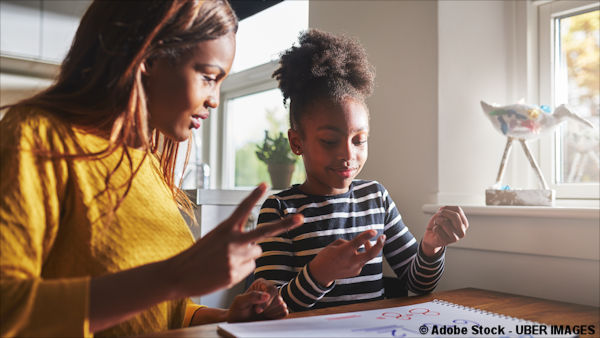


Tell them stories about your own life and your own frustrations as you tried to learn something new. Or stories of others that you know. Stories are powerful teaching tools. Through life illustrations, we can do our best to help our children see that as they persevere, they will eventually master whatever it is that they are having difficulty with.

But you need to have that vision in order to pass it on: the vision that they will learn, they will improve, they will get it. Because…they will.

Both model and teach them…

Patience. Faithfulness. Little by little, every day.

Little by Little (or “Rome Wasn’t Built in a Day”) – Part 1

We live in a society where so much is instantaneous or almost – fast food, fast internet – we don’t like to wait.

But not everything happens quickly – there are times and there are seasons.

When spring begins, it doesn’t come in one day (at least where we live) but comes over a period of weeks.

Children don’t learn to walk immediately, but go through developmental stages, from standing holding on to something, to travelling while holding onto something, to standing on their own, to taking a few steps, and then a few more, and eventually walking and sometimes falling, until they are finally walking steadily.

As we teach our children, whether academic subjects or behavior for life, they do not learn in an instant. Yes, sometimes things just “click,” and they get it without much effort. But other times there is a slow progression. Perhaps they aren’t developmentally ready when we introduce a concept, and we need to be patient until they are ready. Perhaps we need to try and present it another way. Perhaps we just have to work at it and work at it and work at it with them.

Patience.

The non-academic things we are teaching our children can sometimes require more patience than the academic subjects. “Don’t hit your sister” was one that took our boys quite a long time to learn. “We don’t hit girls, we protect them”. (“Yeah, but what if they are provoking me beyond measure?” “This is how to handle it:________”). And this concept needed to be taught over and over and over. How to handle provocation without physical violence. A good concept for life.

And because these things need to be taught over and over and over, it might seem that our children will never get it!

Be faithful. Keep at it. And pray.

I remember one season where I would call to my boys in the morning and they would come to the bottom of the stairs (their room was in the basement) to see what I wanted. “Time to get dressed”, I would say. (They had been playing and were still in their pajamas). “Oh Mom!” they would groan. “Do we have to? Can’t we play?” But in spite of their weeping and wailing and gnashing of teeth (okay, that’s a slight exaggeration) they would have to stop playing and get dressed and begin their day.

I wondered to myself, why we went through this scenario Every…Single…Day. Didn’t they understand that they had to get dressed every day when I said so, no matter how much they complained or didn’t want to? Why didn’t they get it?

And then one day I noticed that they just got dressed without me having to call and tell them to do so.

Patience. Faithfulness. Little by little, every day.

Ask, Ask, and Ask for Wisdom!

Maybe it’s just me (although probably not), but even after parenting/homeschooling for decades, each day there are situations where I need God’s wisdom.

Whether two children are arguing and I’m not sure (this time) how to handle the specific situation, or one of my children isn’t “getting it” in a certain subject, and although I have tried to patiently explain it, he still doesn’t understand, or there’s some emotional upset from a teenage daughter that I need some special wisdom to handle…

The great news is that God promises to give wisdom to us when we ask for it!

“If any of you lacks wisdom, let him ask God, who gives generously to all without reproach, and it will be given him.” (James 1:5)

Time and time again, when I am in a situation (such as those above and so much more), I stop and ask God for wisdom. And He gives it.

So the next time you are in a situation (whether parenting, homeschooling, or other) and you are stumped about how to handle it, ask God for wisdom. He promises to give it.

The Same Old Path?

Field way on the green field

I was going to call this post “In a Rut?” But that sounded negative. “The Same Old Path” sounds negative as well, but it isn’t necessarily.

Let me explain:

As homeschoolers, we have a lot of freedom and choice concerning our schedule or daily routine and what curriculum or books we use.

And if we have multiple children, we can pass down the books from child to child.

However, it seems that there is a steady stream of new curriculum that is produced, or at least new to me, as I hear about some marvelous books that someone else is using that they just love! Going to curriculum sales at homeschool conventions can be overwhelming. So much looks so good! It seems more exciting than what I have!

Whenever I have been tempted to buy something new, my husband has asked me, “Does what you have been using work?” And my answer would usually be “yes,” although sometimes I would give him reasons why the new item I wanted to purchase would work better.

It is a good thing to homeschool in the same way, with the same routine, and the same books if it is working well. There is nothing wrong with the same old path, if it is a good one.

But sometimes a change is needed, because all children are not the same. For example, I have used the same high school English  writing course for most of my children. Last spring, I realized that it would be beneficial for one of my daughters to do a correspondence course in English instead of the same books I had used with the others. I had several reasons for making this decision and my husband supported me.

My daughter began this course. It was a whole new world tackling this, and involved more of my time to get her started and for us to figure out how to manage it. The English path I had trodden with so many of my children was a good path, comfortable, and involving minimum work from me.

It was acceptable and even good to follow the same path for most of my other children, but happily I was aware enough to realize that this daughter needed something different.

This is true regarding our daily schedule or routine. If it’s working, stay on it. If it’s not, change it. You have that freedom!

Wise and Innocent, but not Naive!

Jesus instructs his disciples to be “wise as serpents, but innocent as doves” (Matthew 10:16).

As parents, we want to be wise and innocent, but not naïve, which is defined as “showing a lack of experience, wisdom, or judgement.”

I was naïve. I had a lack of experience with the Internet – I had no idea what dark, evil things could come into our godly home without my even knowing. My son, who was affected by these dark, evil things told me: “It’s not really your fault, Mom. The Internet happened so fast that none of the parents of your generation had a clue.”

We now have a clue. But how much of one? Do you know that there are 50,000 online predators, seeking to ensnare your children? Do you know that pornography is a 98-million-dollar business, and if the people making money off of it could ensnare your children, they will eventually make more money? Your child does not have to be actively seeking pornography, or even know that it exists, to stumble onto it by accident. Most children first see pornography when they are doing research online for school.

I recently saw a documentary about pornography entitled, “Over 18.” It begins with a young boy who tells his story. He describes how he was looking at pornography on the computer even while sitting beside his mother, doing his schoolwork. Yes, he was homeschooled. He talks about the hold it had on him. He ends with, “My name is Joseph. I am thirteen years old, and I am a recovering porn addict.”

We homeschoolers have tended to think, “Not our children! I know what they do, I know who they are with. They love Jesus, etc.” I believe we are beginning to wake up and lose our naivety, and realize that we need to be very proactive in protecting our children (by getting proper filters, not giving them Smart phones, etc., and equipping them for when [my son Josh says “when” not “if”] they stumble across pornography, what to do about it.

We need to prepare them for a world where if they don’t become addicted to pornography, they might have a thirteen-year-old friend who is, and how to handle that.

We also, sadly, need to have dialogues with our children in order to protect them from being abused. Apparently ninety per cent of abuse happens from trusted family and friends.

I am writing about these ugly things not to scare you or make you paranoid, but to motivate you to be proactive in educating and protecting your kids, so that Joseph’s testimony is not your kids’.

Praise God, there is help!

One place to begin is with an organization that my son, Josh, now leads. It is called “Strength To Fight” (http://strengthtofight.ca). Here you can find help to educate and porn-proof your household as well as help in getting free from porn addiction, and other related areas.

As parents, we need to be informed, and learn how to protect our children.